Birds

Greylag Goose

Anser anser

Greylag Goose

General Overview

The Greylag Goose is the wild ancestor of most European domestic geese and one of the most emblematic waterbirds of the Danube Delta. Robust, intelligent and highly vigilant, it is the only wild goose species that breeds regularly in Romania. Present throughout the year in the Delta, it links the seasons through its life cycle: in spring, loud pairing calls echo over the reedbeds; in summer, family lines of goslings swim among the reeds; in autumn and winter, flocks patrol between open water and surrounding agricultural fields. For local communities, the silhouettes and calls of Greylag Geese are part of the traditional soundscape of the Delta.

Physical Characteristics

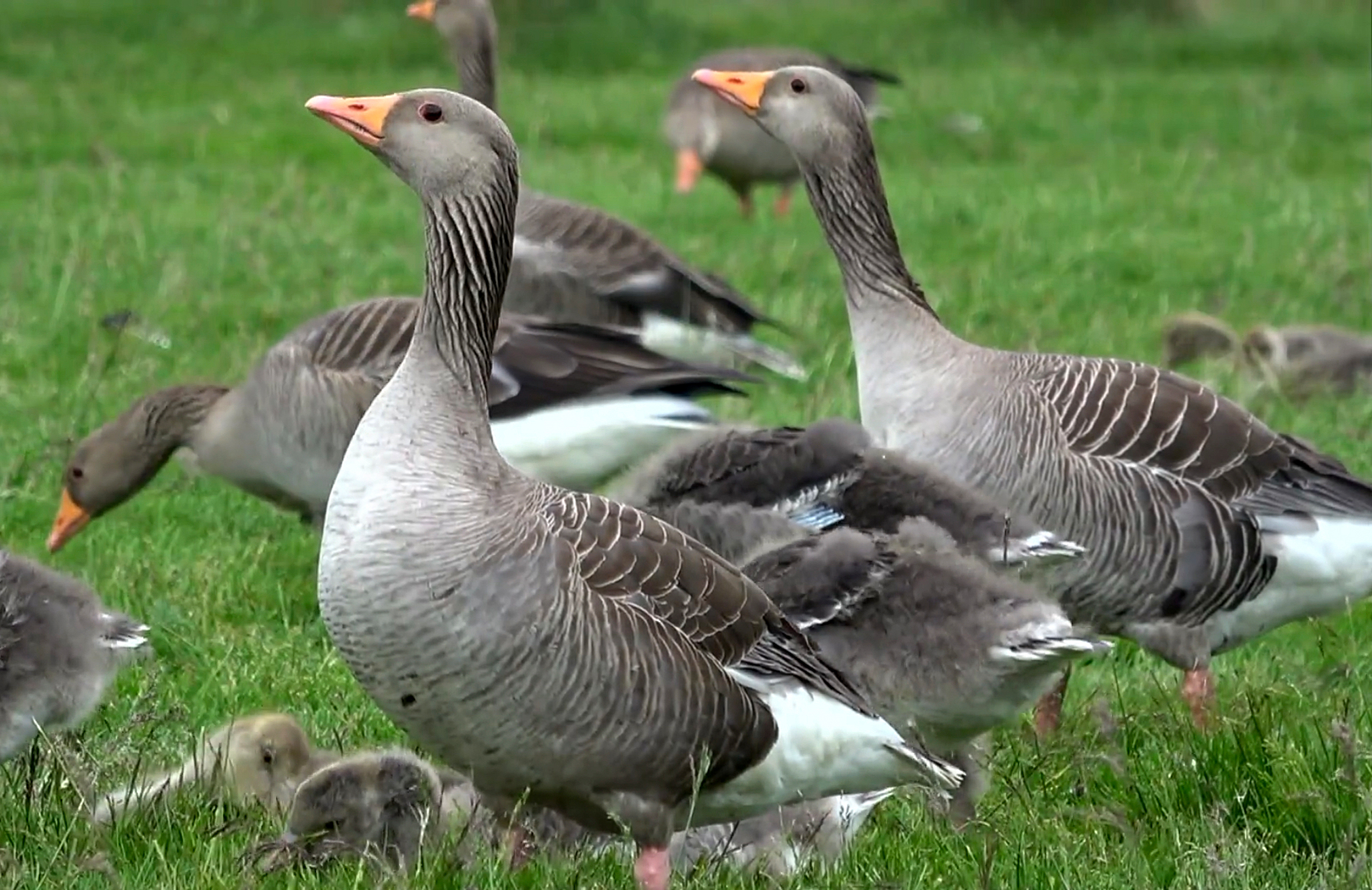
The Greylag Goose has predominantly grey‑brown plumage with pale feather edges that create a scaly appearance. The head and neck are slightly darker, while the chest is broad and rounded. It differs from other geese by its large, uniformly orange bill (without a dark tip) and pink legs. In flight the leading edge of the wings appears very pale, almost whitish, contrasting with the rest of the body. The dark eyes and alert expression reinforce the impression of a cautious, watchful bird. Although it can seem heavy and clumsy on land, in the air it flies strongly and efficiently, usually in V‑shaped or extended line formations.

Habitat & Distribution

Greylag Geese prefer marshes and lakes with extensive reedbeds, where they can find both secure nesting sites and abundant feeding areas. In the Danube Delta they are widespread on many of the larger lakes, especially where reeds form floating islands and inaccessible patches that offer protection from terrestrial predators and human disturbance. They also use seasonally flooded meadows and surrounding agricultural land, where they graze and feed on crop residues. Northern populations are migratory, but in the Delta a significant part of the population is resident or partly resident, remaining in the area during mild winters as long as sufficient open water and food are available.

Behavior & Feeding

Greylag Geese are very cautious and noisy birds. Their loud, resonant honking is unmistakable and reminiscent of domestic geese, though often more forceful and penetrating. During the breeding season they form pairs and family groups; outside this period they gather in flocks of varying size. They graze on grass, shoots, shallow roots and crops, frequently visiting agricultural fields at the edge of the Delta, especially wheat and maize stubble. Parents are extremely protective of their goslings, reacting immediately to potential threats and leading the young to open water or into dense vegetation. Their strong social bonds and coordinated behaviour make them a familiar and charismatic presence on the Delta's waters.

Life Cycle & Reproduction

Greylag Geese typically form long‑term pair bonds, often remaining together for life. They nest in dense reedbeds, frequently on floating vegetation mats or reed islands where access for predators is difficult. The nest is a mound of plant material lined with down and dried vegetation. The usual clutch consists of 4–6 eggs, and incubation lasts 27–28 days, mainly performed by the female while the male guards the territory. The goslings are precocial and leave the nest soon after hatching, following their parents to the water where they find both safety and food. Family groups can be seen throughout the summer feeding and moving together; later in the season they join other families and form larger flocks that move between lakes and feeding areas.

Conservation Status

Globally, the Greylag Goose is listed as Least Concern, with many European populations stable or increasing thanks to wetland protection and changes in agriculture. Nevertheless, the species still depends on extensive, healthy wetlands and reedbeds, as well as on agricultural practices that leave room for wildlife. In Romania it is a regulated game species, with hunting limited to specific seasons, quotas and zones. Ongoing monitoring of Delta populations, strict protection of key breeding and moulting sites, and careful management of hunting pressure are essential to maintain a healthy Greylag Goose population in the Danube Delta over the long term.

Sources

  • Birds of the Danube Delta – Part 1
  • BirdLife International – Greylag Goose
  • IUCN Red List – Anser anser
  • Wikipedia.org