Fish Vulnerable (VU)

Streber

Zingel streber

Streber

Overview

The Danube is the smallest and most threatened representative of the *Zingel* genus, classified as Vulnerable (VU) and on the red list in Romania, Bulgaria, Austria, Bavaria. Protected by the Berne Convention and CITES. Endemic to the Danube basin. Prefers flowing, shallow waters with sand and gravel bottoms, often near banks. Unlike *Z. zingel* (fusar), the Danube does not avoid coastal areas. Crepuscular and nocturnal activity - moves jerkily on bottom using pectorals and pelvis for propulsion. Illegal fishing, habitat loss (dams, drains), and pollution have dramatically reduced populations.

Physical Characteristics

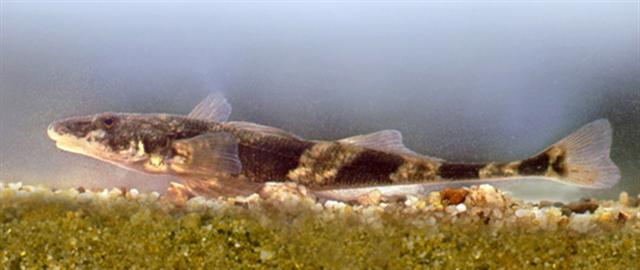
Elongated fusiform body with a slender, long caudal peduncle. Head dorso-ventrally compressed with a triangular profile — a characteristic feature of the genus Zingel. Small subterminal mouth. Two dorsal fins set well apart. Colouration yellowish-brown with 4–5 broad oblique black bands on the flanks, alternating with paler areas. Pale yellowish-white belly. Usual length 12–17 cm, maximum 22 cm and 80–150 grams. The smallest member of the genus.

Habitat & Distribution

Endemic to the Danube, Dniester, and Vardar basins. In Romania, present in the Danube from entry to the mouth, and in the Tisza, Someș, Criș, Mureș, Timiș, Nera, Jiu, Siret, Moldova, and Prut rivers. Requires flowing water with moderate current, sandy-gravel bottoms, and stony bank areas. Unlike the zingel (fusar), the streber is not averse to shallow littoral zones. A benthic, nocturnal species that shelters by day under stones or in bank cavities.

Behavior & Diet

Specialist nocturnal benthic carnivore. Feeds on worms, aquatic insect larvae, crustaceans, fish eggs, and fry. Moves in short spurts along the riverbed, using pectoral and pelvic fins rather than conventional swimming. An efficient predator in low-light conditions. Active mainly in reaches with moderate current over stony beds.

Life Cycle & Reproduction

Sexual maturity at 2 years. Spawning March–May. Females deposit adhesive eggs (~2 mm diameter) in crevices in gravelly banks, with no subsequent parental care. Incubation lasts 14–23 days — one of the longest incubation periods among European percids, indicating slow embryonic development in cold-water habitats. Lifespan 5 years.

Conservation Status

Vulnerable (VU) — critically threatened at the regional level. Red-listed in Romania, Bulgaria, Austria, and Bavaria. Protected under the Berne Convention and CITES. Primary threats: habitat loss through dams and river channelisation that eliminate spawning grounds, water pollution from pesticides and industrial effluents, and illegal fishing. Populations declining dramatically. The legal minimum size is 12 cm, but the species should receive full protection. Habitat restoration and a halt to new dams on rivers supporting streber populations are urgently needed.

Sources

  • FishBase: Zingel streber
  • Wikipedia: Streber
  • IUCN Red List: Zingel streber
  • Scientific publications on Danubian percid conservation