Birds

Pied Avocet

Recurvirostra avosetta

Pied Avocet

Overview

The woodpecker is one of the most elegant shorebirds. Its name comes from its most distinctive feature: a long and very thin black beak, curved spectacularly upwards at the tip. It is a symbolic bird for the brackish water areas of Dobrogea.

Physical Characteristics

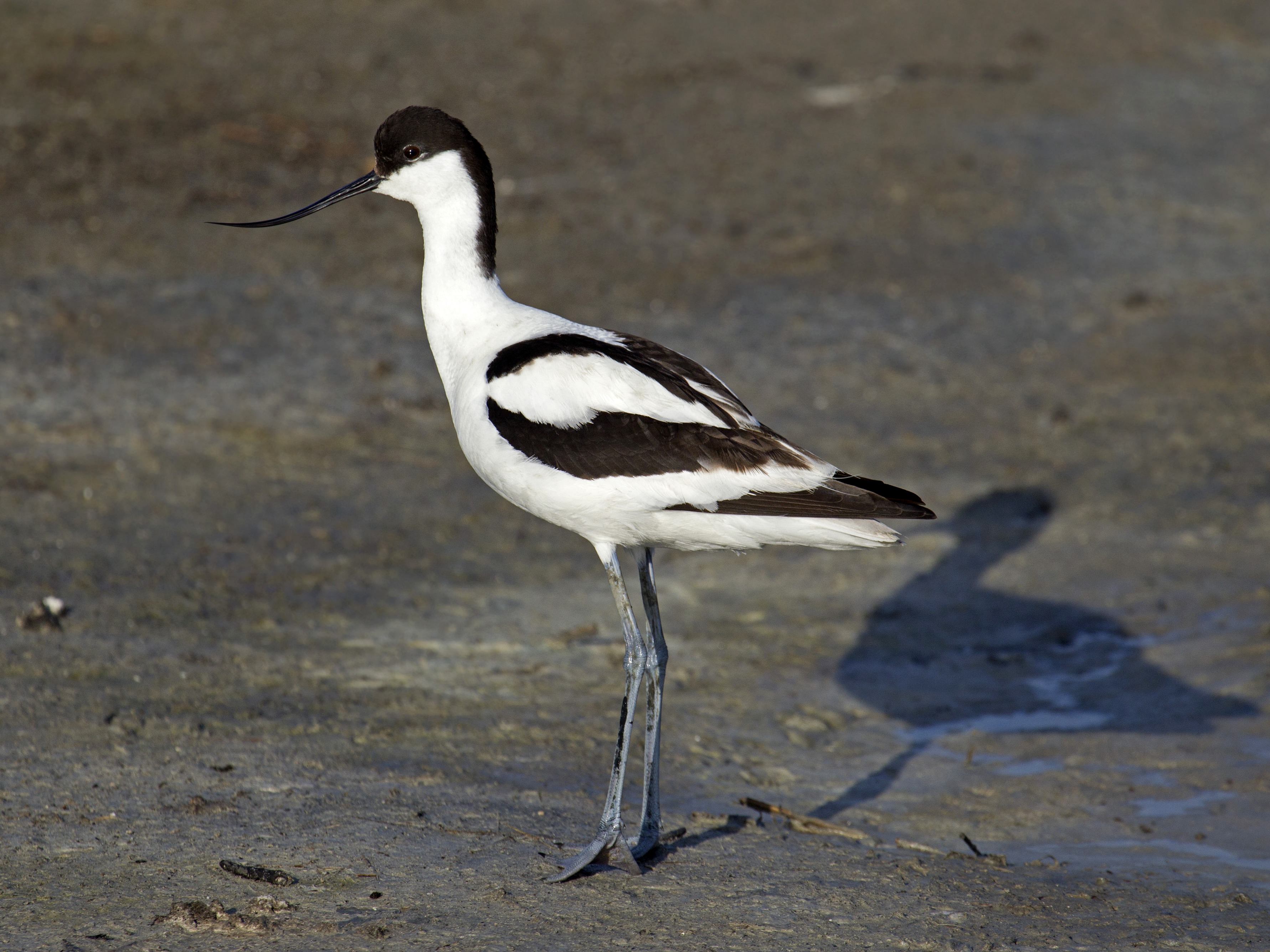
The plumage is a graphic mix of black and white: predominantly white body with partially black wings and a black crown extending down the back of the neck. The legs are very long and pale blue-grey. The bill — unique in the bird world — is long, slender and upcurved, a precision instrument for feeding in water.

Habitat & Distribution

Favours lagoons, saline lakes and areas of very shallow water with muddy substrate. In the Danube Delta it is most frequently encountered in the southern zone and in the Razim-Sinoe complex. A migratory species that departs for Africa or the Mediterranean basin in September.

Behaviour & Diet

Feeds in a unique way: sweeps its partly open bill from side to side through water or soft mud (a scything motion), detecting crustaceans and small insects by touch. Vocal, with a melodious "kluit-kluit" call.

Life Cycle & Breeding

Breeds colonially on bare muddy shores or small islands. The nest is a simple scrape in the ground. The female lays 3–4 eggs, incubated by both parents for approximately 23–25 days. Chicks are nidifugous and follow their parents to the water immediately after hatching.

Conservation Status

Globally Least Concern (LC), but vulnerable to changes in salinity and water level fluctuations in nesting areas, which can flood ground-level nests. The hydrological management of brackish zones has a direct impact on the population.

Sources

  • SOR.ro — Ciocîntors
  • BirdLife International — Pied Avocet
  • IUCN Red List — Recurvirostra avosetta
  • Wikipedia.org