Birds

European Nightjar

Caprimulgus europaeus

European Nightjar

Overview

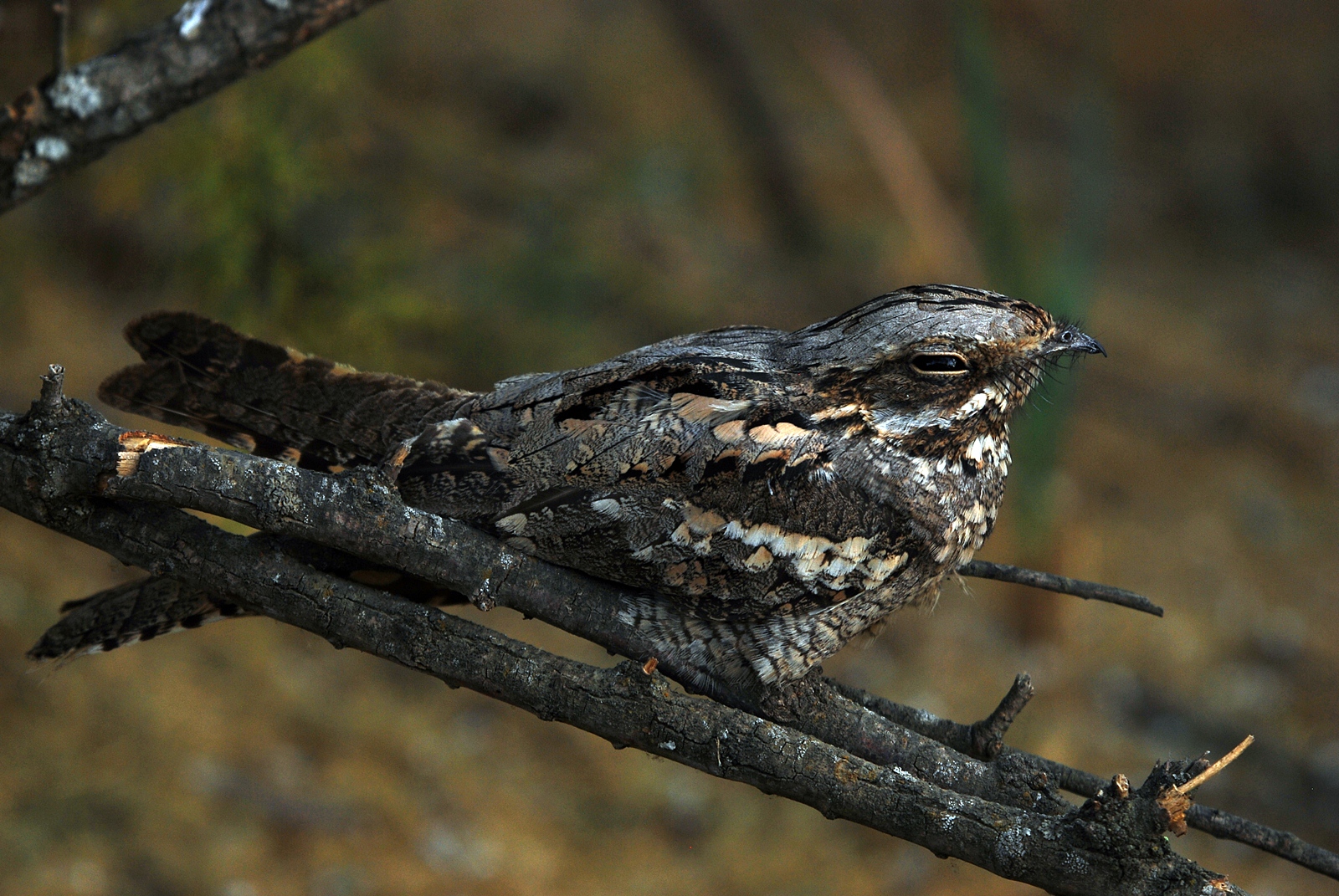
The caprimulgu is a mysterious, crepuscular and nocturnal bird, famous for its absolutely incredible camouflage. During the day, it sits motionless on the ground or on branches, blending in perfectly with dry foliage or tree bark. In the Danube Delta, the forests on the Letea and Caraorman ridges, with their sandy areas and sunny edges, represent the ideal habitat for this species that looks more like a piece of wood than a living being.

Physical Characteristics

The plumage is a masterpiece of camouflage: a blend of grey, brown, ochre and black that perfectly mimics tree bark or dry leaves. The head is broad and flattened, with an extremely wide gape fringed with stiff rictal bristles that help funnel insects into the mouth in flight. The eyes are large and dark — by day they are often kept closed to avoid betraying its position. The legs are very short and weak; prey is caught exclusively in flight.

Habitat & Distribution

Favours woodland edges, heathland, scrub and sparsely vegetated sand dunes. The Danube Delta — especially the Letea and Caraorman ridge forests — provides optimal breeding and foraging conditions. A long-distance migrant, arriving late (May) and departing early (August–September) for sub-Saharan Africa where it winters.

Behaviour & Diet

Active only at dusk and through the night. Hunts large insects on the wing — moths, beetles, mosquitoes — with astonishing agility and an almost silent flight reminiscent of owls. The male's song is a prolonged, monotonous churring — like a distant motorcycle engine — that can continue uninterrupted for minutes at a stretch. This characteristic "churring" is the surest sign of the species' presence in the forest.

Life Cycle & Breeding

No nest is built. The female lays 2 eggs directly on sand or dry leaf litter, where their colour renders them virtually invisible. Incubation is shared by both parents and lasts around 18 days. Chicks are semi-precocial and can move short distances shortly after hatching to find shade or hide from predators.

Conservation Status

Considered to have unfavourable conservation status in parts of Europe due to loss of woodland-edge habitat and the wider decline in insect populations linked to pesticide use. In the Danube Delta, the population is stable thanks to the protected status of the Letea and Caraorman forests. The main local threats are human disturbance after dark and vehicle collisions on roads through the Reserve.

Sources

  • SOR.ro — Caprimulgul
  • BirdLife International — European Nightjar
  • IUCN Red List
  • Wikipedia.org