Fish

European Bitterling

Rhodeus amarus

European Bitterling

Overview

The European bitterling (*Rhodeus amarus*) is a small fish famous in ichthyology for its unique symbiosis with freshwater mussels. It is one of the most colourful native species, with males displaying spectacular hues during the breeding season. Although it has no culinary value, its presence is an excellent indicator of ecosystem health, since its survival depends directly on the existence of mussel populations.

Physical Characteristics

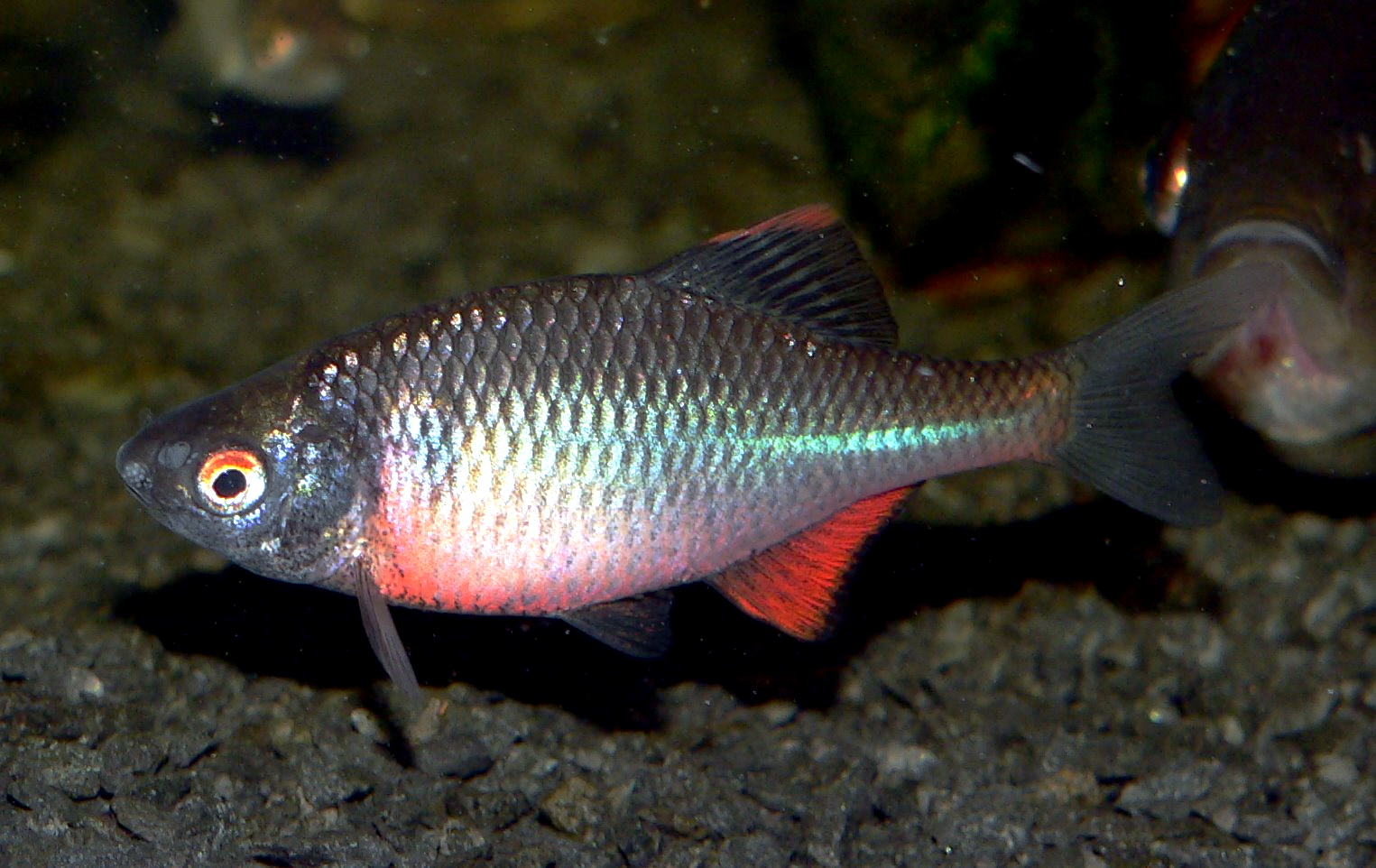
It has a tall, strongly laterally compressed body covered with relatively large scales. The lateral line is incomplete, visible only on the first 5-6 scales. Back colour is greyish-green, and flanks are silvery. During the breeding season, males acquire iridescent colours: a greenish-blue stripe on the tail, pink tones on the belly, and reddish fins. Females develop a special organ called the ovipositor, which can reach body length.

Habitat & Distribution

A widespread species in Central and Eastern Europe. In the Danube Delta, the bitterling occupies still or slow-flowing waters with abundant vegetation and muddy or sandy bottoms, where mussels of the genera Unio or Anodonta live.

Behavior & Feeding

The bitterling is a peaceful fish living in small groups. Its diet consists mainly of plant matter, unicellular algae, and detritus, occasionally supplemented with small crustaceans or insect larvae. It is a cautious fish, preferring to stay near shelter offered by aquatic plants.

Life Cycle & Reproduction

Reproduction (April-August) is a fascinating process: the female inserts her ovipositor into the inhalant siphon of a living mussel and deposits eggs in its gill cavity. The male releases sperm near the mussel's inhalant siphon, fertilizing the eggs inside. Larvae develop sheltered in the mussel shell for several weeks, during which the mussel provides protection and oxygen. In return, mussel larvae (glochidia) can temporarily attach to fish for dispersal to other areas.

Conservation Status

The species is classified as Least Concern (LC). However, the bitterling is indirectly threatened by any factor affecting mussel populations (pollution, excessive siltation, invasive species). In Romania, it is a common species, often used as live bait by sport fishermen.