Birds

Black Stork

Ciconia nigra

Black Stork

Overview

Unlike its white relative, the black stork is an extremely shy and reclusive bird that avoids contact with humans. In the Danube Delta, it can be found in older wooded areas or at the edge of isolated marshes, being a much rarer presence and difficult to notice.

Physical Characteristics

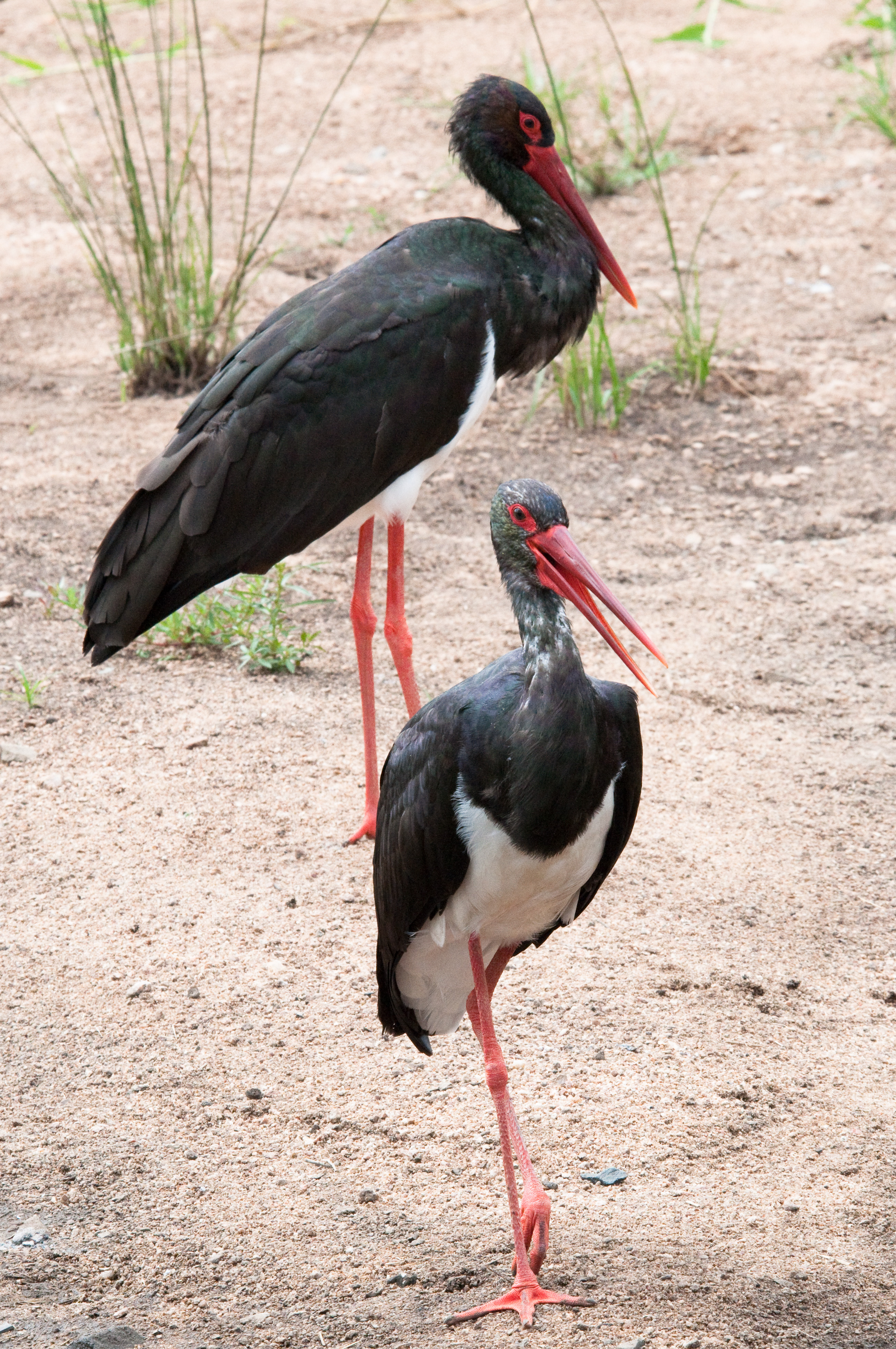
Predominantly black plumage with iridescent green, violet and copper reflections, while the breast and belly are white. Bill, legs and the bare skin around the eyes are bright red in adults. Juveniles have duller, brownish-black plumage with greenish-brown legs and bill. The in-flight silhouette — with neck and legs extended — is similar to the White Stork, but the colouring is immediately diagnostic.

Habitat & Distribution

Favours mature forest with tall trees near watercourses or marshy areas. In the Delta, areas such as the Letea and Caraorman forests provide ideal nesting habitat. A migratory species that crosses the Bosphorus to winter in sub-Saharan Africa and the Indian subcontinent.

Behaviour & Diet

Hunts primarily fish, but also amphibians and aquatic insects, preferring the clear, shallow, secluded waters of backwater channels and streams. Far quieter than the White Stork — bill-clattering is rarely heard. Hunts alone, patiently, either standing motionless at the water's edge or walking slowly through the shallows.

Life Cycle & Breeding

Arrives in Romania in April and constructs or refurbishes a large stick nest high in a tall forest tree. The female lays 3–5 eggs, incubated for approximately 35 days. Chicks remain in the nest for around 60–70 days. Extremely sensitive to human disturbance during the breeding season.

Conservation Status

Though globally Least Concern (LC), in Romania it is considered a rare species. Extremely sensitive to human disturbance at the nest and will quickly abandon breeding if people approach. Protecting quiet zones in old-growth forests and maintaining clean, undisturbed watercourses is essential for this species in the Delta.

Sources

  • SOR.ro — Barza neagră
  • BirdLife International — Black Stork
  • IUCN Red List — Ciconia nigra
  • Wikipedia.org