Birds

Lesser Spotted Eagle

Clanga pomarina

Lesser Spotted Eagle

General Overview

The little screaming eagle is one of the most emblematic birds of prey of the Romanian agro-pastoral landscape. It is a medium-sized eagle, notable for its impressive migration to sub-Saharan Africa. In the Danube Delta and Dobrogea region, this bird finds ideal feeding habitats on wet meadows and mosaic agricultural land. Although it bears the name "eagle", it is smaller and more graceful than its royal relatives, specializing in capturing prey from ground level in open areas.

Physical Characteristics

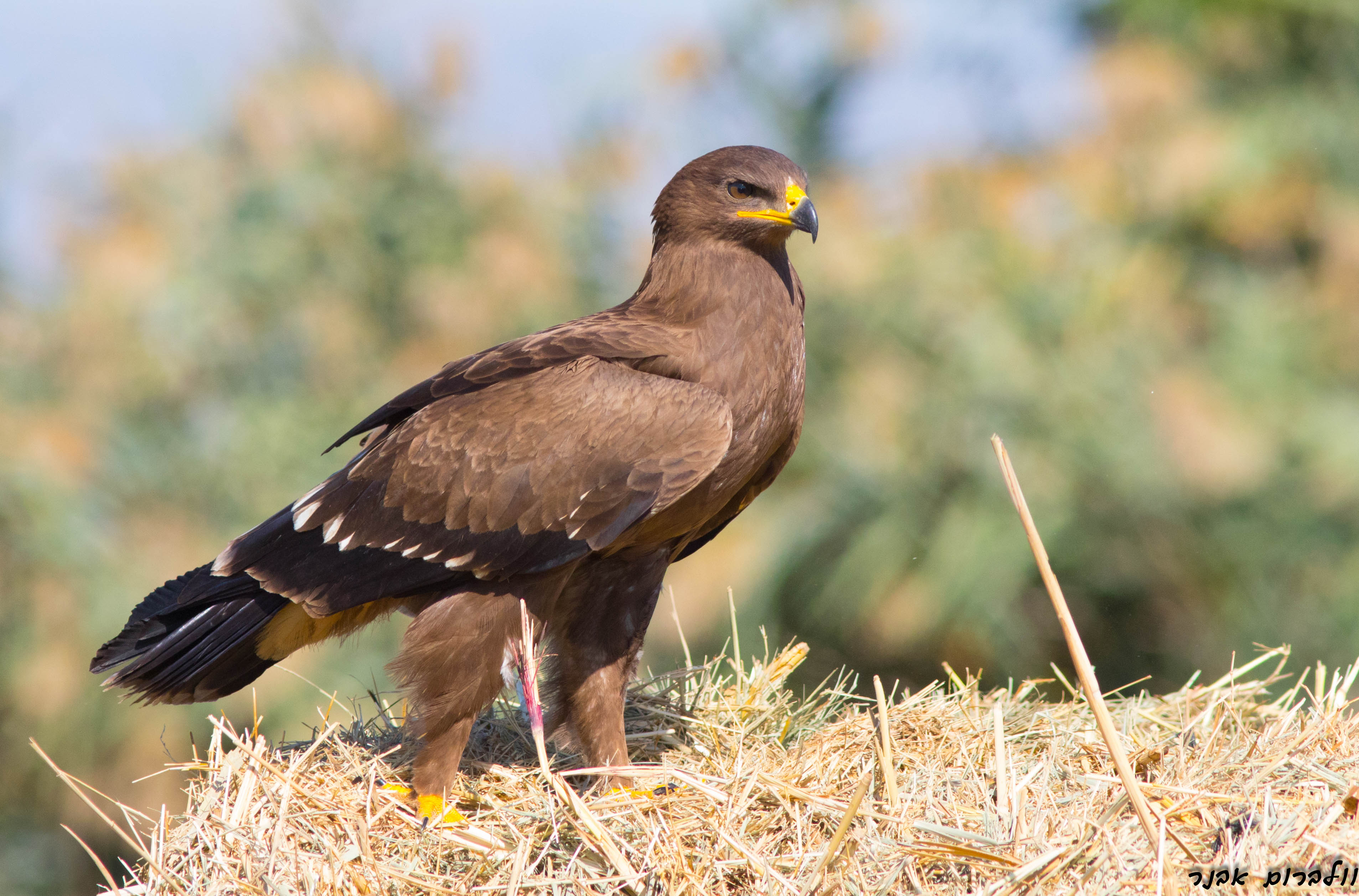
A medium-small eagle, dark brown on the back and wings with a paler, golden-brown head and neck. The inner wing shows a contrast between dark flight feathers and paler coverts. The white rump patch is smaller and less visible than on the Greater Spotted Eagle. Juveniles have pale feather tips creating a spotted appearance. Bill robust, yellow at base, darkening to a hook at the tip. Legs yellow, talons powerful. Overall the plumage is noticeably paler and browner than that of the Greater Spotted Eagle, aiding identification in good light conditions.

Habitat & Distribution

Breeds in Romania in lowland and foothill forests, generally below 500 m, favouring mixed or deciduous woodland close to lakes, marshes, or damp meadows. In the Danube Delta, occurs on passage, especially on days with favourable thermals. Wintering range is in eastern and southern Africa, where it often coexists with other European migrant raptors. The European breeding population is centred on central and eastern Europe, with Romania holding a significant share of the continental total.

Behaviour & Feeding

Primarily a ground hunter — walks methodically through grass and marsh in search of voles, frogs, earthworms, and large insects. Rarely catches prey in flight. Migrates in large flocks, often mixed with Common Buzzards and other raptors, using thermals to conserve energy over long distances. Notable: can hybridise with the Greater Spotted Eagle (Clanga clanga), producing fertile hybrids that are extremely difficult to identify in the field and that pose a significant challenge for population monitoring.

Life Cycle & Reproduction

Monogamous, nesting in large trees at forest edges or inside damp woodland. Lays 1–2 white, brownish-spotted eggs in May–June. Incubation lasts 38–41 days, with both parents participating. Usually only one chick survives — the phenomenon of cainism (the stronger chick eliminating the weaker) is well documented in this species. Young birds fledge at 51–56 days. Juveniles migrate independently to Africa in their first autumn, a remarkable feat for birds of their age.

Conservation Status

Classified as Least Concern (LC) globally, with a European breeding population estimated at 9,700–15,000 pairs. In Romania, populations are moderately stable, though loss of lowland forest and agricultural intensification reduce prey availability. Hybridisation with the Greater Spotted Eagle poses an additional concern for the genetic integrity of both species. Preservation of old-growth lowland forests and traditional moist meadows adjacent to wetland systems is essential for the long-term stability of Romanian breeding populations.

Sources

  • BirdLife International — Lesser Spotted Eagle
  • IUCN Red List
  • SOR.ro — Lesser Spotted Eagle
  • Handbook of the Birds of the World
  • Wikipedia.org